


For centuries, the world's oceans have swallowed ships carrying explorers, merchants, soldiers, passengers, scientists and entire chapters of human history. Some vessels disappeared during violent storms, others were destroyed by war, ice, navigation errors or structural failures. Once they vanished beneath the waves, many remained hidden for decades or even centuries.
Today, these famous shipwrecks are far more than underwater remains. They are historical archives that can reveal how people traveled, traded, fought wars, built ships and lived in different periods. Modern underwater archaeology allows researchers to study these sites using sonar, remotely operated vehicles, high-resolution imaging and three-dimensional mapping.
From the legendary Titanic shipwreck in the North Atlantic to the remarkably preserved Vasa in Stockholm and Ernest Shackleton's Endurance beneath Antarctic waters, these lost vessels demonstrate how the ocean can simultaneously destroy, preserve and conceal human history.
A shipwreck can preserve evidence about shipbuilding, navigation, trade, warfare, technology and everyday life. For maritime archaeologists, the vessel and its surrounding seabed are often more valuable as a historical site than as a collection of individual objects.
Why Are Shipwrecks Considered Priceless Historical Treasures?
The word “priceless” does not necessarily mean that a sunken ship contains gold or precious jewels. In archaeology, historical value can be much greater than monetary value. A wreck may preserve a unique record of a particular moment that cannot be reconstructed from written documents alone.
Objects inside a wreck can reveal what people ate, what tools they used, what materials were available, how cargo was organized and how ships were engineered. Even the position of damaged structures can provide clues about how a vessel sank.
This is why modern maritime archaeology increasingly emphasizes documentation and conservation. Researchers seek to understand the entire archaeological context rather than treating a shipwreck as a collection of valuable objects.
The Titanic: The World's Most Famous Shipwreck
The RMS Titanic remains one of the most recognizable shipwrecks in history. The British passenger liner sank in the North Atlantic on April 15, 1912, after striking an iceberg during its maiden voyage.

The disaster became one of the most famous maritime tragedies in modern history. Approximately 1,500 people died, while the ship itself disappeared into the deep Atlantic.
For decades, the wreck remained undiscovered. On September 1, 1985, an expedition led by oceanographer Robert Ballard located the wreck site and identified the remains of the ship on the seabed. The discovery transformed deep-ocean exploration and opened a new chapter in the scientific study of the Titanic.
The Titanic rests at a depth of approximately 3,800 meters. Its extreme depth makes ordinary diving impossible and requires specialized deep-sea technology and remotely operated vehicles.
The Titanic Is Slowly Changing
One of the most fascinating aspects of the Titanic wreck is that it is not permanently frozen in time. The ship continues to deteriorate under the influence of seawater, corrosion and microbial activity.
Researchers have documented changes to the wreck over the decades. The condition of the site demonstrates that even a massive steel vessel is vulnerable to long-term environmental processes beneath the ocean.
The Titanic therefore represents both a historical archive and an extraordinary example of how large structures behave in the deep-sea environment.
The Vasa: A Ship That Sank Almost Immediately
The Vasa provides a completely different story. This magnificent Swedish warship sank on its maiden voyage in Stockholm harbor in 1628, only minutes after setting sail.
/https://tf-cmsv2-smithsonianmag-media.s3.amazonaws.com/filer_public/b8/f8/b8f823b5-7c3b-4bd1-b790-121d311552ee/vasa_bow.jpg)
The ship's design included impressive decorative carvings and numerous guns, reflecting the ambitions of the Swedish monarchy during a period of intense military competition in Europe.
Vasa's instability became apparent almost immediately. A strong gust caused the vessel to heel, and water entered through open gun ports. The ship sank in relatively shallow waters.
More than three centuries later, the wreck was located and raised in 1961. Its recovery became one of the most important maritime archaeological projects of the twentieth century.
Why the Vasa Is So Important to Historians
The Vasa survived in remarkable condition partly because of the environmental conditions of Stockholm's waters. The preservation of its wooden structure and thousands of associated artifacts created an extraordinary opportunity to study seventeenth-century shipbuilding and daily life.
Researchers found weapons, tools, clothing, coins, food-related objects and other materials. Together, these discoveries provided information that written historical records could not provide on their own.
Titanic: The famous 1912 ocean liner lies in the North Atlantic at great depth. Its wreck has become an important site for deep-sea research and maritime heritage.
Vasa: The seventeenth-century Swedish warship sank during its maiden voyage in 1628 and was recovered in 1961. Its exceptional preservation provides researchers with detailed evidence about early modern shipbuilding and life.
Endurance: Ernest Shackleton's expedition ship was trapped and crushed by Antarctic sea ice during the Imperial Trans-Antarctic Expedition. Its wreck was discovered in the Weddell Sea in 2022 in remarkable condition.
Britannic: Titanic's sister ship was converted into a hospital ship during World War I. It struck a mine near the Greek island of Kea in 1916 and sank in less than an hour.
Endurance: The Ship Lost in Antarctic Ice
Few shipwreck stories are as closely connected with exploration as that of Endurance, the vessel used by Ernest Shackleton during the Imperial Trans-Antarctic Expedition.
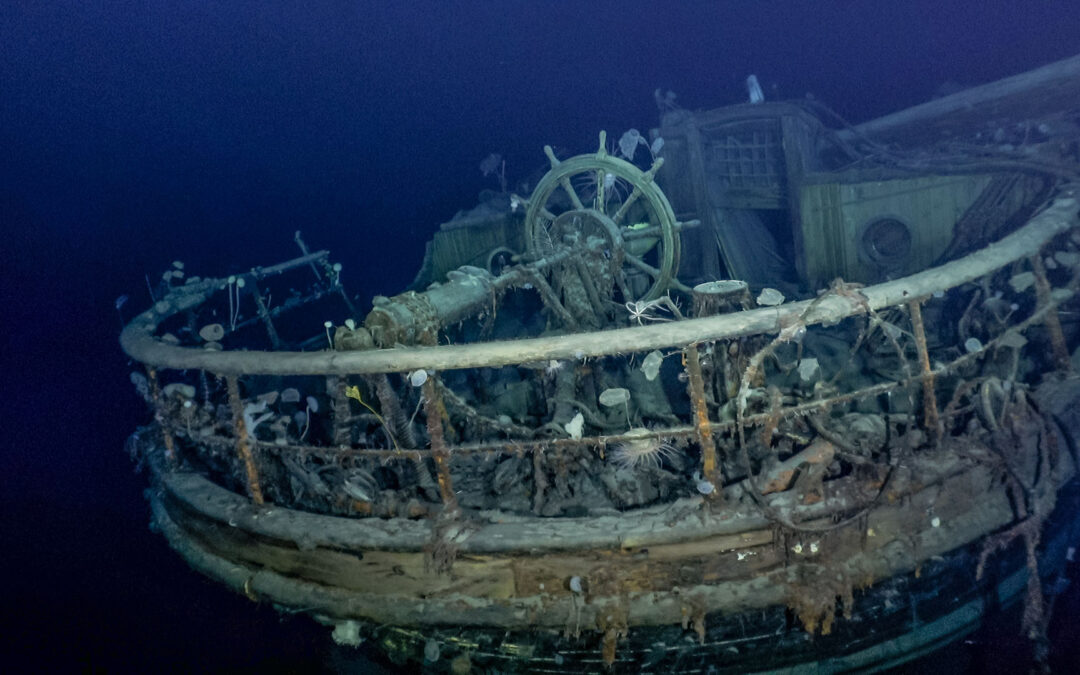
The expedition began in 1914 with the ambitious goal of crossing Antarctica. The plan changed dramatically when Endurance became trapped in pack ice in the Weddell Sea.
The pressure of the surrounding ice eventually crushed the vessel. Shackleton and his crew were forced to abandon the ship and survive in one of the harshest environments on Earth.
Remarkably, all 27 members of the Endurance crew survived the expedition's ordeal. The ship itself, however, disappeared beneath the Antarctic waters.
Endurance Was Found After More Than a Century
For more than a hundred years, Endurance remained lost beneath the Weddell Sea. The extreme environment made locating the wreck exceptionally difficult.
On March 5, 2022, an international expedition finally located the ship at approximately 3,008 meters below the surface. The wreck remained remarkably intact despite more than a century underwater.
Advanced autonomous underwater vehicles and sonar technology allowed researchers to locate, map and photograph the wreck. High-resolution imaging subsequently helped create a detailed record of the ship.
Why Endurance Was Preserved So Well
The Antarctic environment played an important role in the preservation of Endurance. Extremely cold water and the remote location limited many of the biological and human processes that can accelerate the deterioration of underwater heritage.
The discovery therefore created a rare opportunity to study a historic wooden exploration vessel in its original underwater context.
Britannic: Titanic's Forgotten Sister
The HMHS Britannic was the sister ship of Titanic and originally belonged to the same Olympic-class family of large ocean liners.
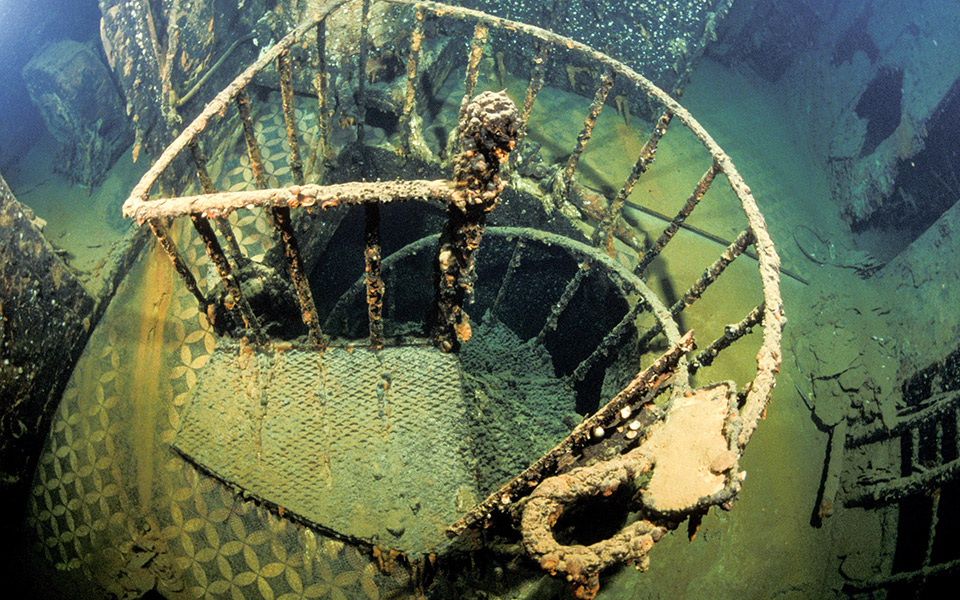
When World War I began, Britannic's planned civilian career changed. The ship was converted into a hospital ship and operated under the British Admiralty.
On November 21, 1916, Britannic struck a mine near the Greek island of Kea while sailing toward the island of Lemnos. The ship sank in less than an hour.
Although the sinking was catastrophic, most people aboard survived. Britannic remains an important maritime heritage site because its story connects the history of luxury ocean liners with the transformation of civilian vessels during wartime.
The Britannic Wreck Beneath the Aegean Sea
Britannic rests at a depth of more than 120 meters. Its comparatively accessible depth, compared with Titanic, has allowed specialized technical divers and researchers to examine parts of the wreck.
The site remains an important maritime heritage location because Britannic represents both the history of ocean liners and the transformation of civilian ships during World War I.
Other Lost Ships Still Waiting to Be Found
The examples above represent only a small part of the world's underwater heritage. Thousands of shipwrecks lie beneath oceans, seas, lakes and rivers, while many have never been located.
Some wrecks may contain evidence about ancient trade networks. Others can illuminate naval warfare, migration, exploration, industrial development or the history of global commerce.
In many cases, researchers do not know exactly where a vessel disappeared. Historical documents, weather records, navigation charts, eyewitness accounts and geological information can all become important pieces of the search.
How Scientists Find Lost Shipwrecks
Finding a shipwreck in the open ocean is vastly more difficult than searching for an object on land. The seabed can cover enormous areas, visibility can be almost nonexistent and the wreck may be buried beneath sediment.
Modern underwater archaeology combines historical research with sophisticated technology. Researchers may begin by studying old maps, shipping records, naval documents and eyewitness accounts.
They can then use sonar systems to scan large areas of seabed. Autonomous underwater vehicles can investigate locations without being directly connected to a surface vessel, while remotely operated vehicles can provide live video and allow researchers to inspect difficult environments.
Sonar and 3D Mapping
Sonar is one of the most important technologies in modern shipwreck research. Instead of relying on ordinary cameras, sonar systems use sound to detect structures beneath or above the seabed.
Once a wreck has been located, researchers can combine sonar data, photographs and laser scanning to create highly detailed three-dimensional models.
These models allow researchers to study the wreck without repeatedly disturbing the physical site. They can also preserve a digital record of a vessel that may continue to deteriorate naturally.
Why Shipwrecks Should Not Be Treated Like Treasure Chests
The popular image of shipwreck exploration often focuses on treasure hunting. Archaeology takes a different approach.
A single object removed from a wreck can lose much of its historical meaning if researchers do not know where it was located, what surrounded it or how it was positioned relative to other objects.
The archaeological context can reveal far more than the object itself. For this reason, responsible underwater archaeology emphasizes documentation, conservation, research and protection of significant sites.
A shipwreck can contain valuable objects, but its greatest significance often lies in the complete archaeological context: the ship, cargo, tools, structures, seabed and relationships between them.
The Ocean as a Giant Historical Archive
The deep ocean is sometimes described as one of the world's largest museums. Unlike a conventional museum, however, its collections are scattered across enormous areas and exposed to changing environmental conditions.
Cold, dark environments can preserve certain materials remarkably well, while other environments accelerate corrosion and biological decay. The condition of each wreck therefore depends heavily on its location, construction materials and surrounding ecosystem.
Researchers studying these sites are effectively reading fragments of history preserved beneath the water.
The Hidden History Inside a Shipwreck
A ship is a complex technological system. Its remains can reveal information about engineering, navigation, manufacturing, trade, social organization and military strategy.
For example, the Vasa provides evidence about seventeenth-century Swedish naval construction, while Endurance offers a rare physical record of polar exploration. Titanic provides insight into early twentieth-century passenger travel, engineering and maritime safety, while Britannic illustrates how ocean liners were transformed for wartime medical service.
Shipwrecks and the History of Human Exploration
Human history is closely connected to maritime travel. Oceans have carried explorers across continents, connected distant markets and enabled the movement of people, ideas, technologies and cultures.
Every lost vessel therefore has the potential to tell a much larger story. A wreck may represent an isolated disaster, but it can also reveal the global systems that existed around it.
Why Some Shipwrecks Are Almost Impossible to Explore
Depth is only one of the challenges facing underwater researchers. Strong currents, extreme pressure, darkness, freezing temperatures, unstable seabeds and limited visibility can make archaeological work extraordinarily difficult.
The Endurance wreck demonstrates this perfectly. Its remote Antarctic location and difficult sea conditions made the search an enormous technological and logistical challenge.
Titanic presents another kind of difficulty because of its extreme depth and the deterioration of the wreck. Researchers must balance scientific curiosity with the need to minimize disturbance to a fragile historical site.
What Happens to a Ship After It Sinks?
A shipwreck does not stop changing when it reaches the seabed. Once underwater, it becomes part of a new ecological and chemical environment.
Metal structures can corrode. Wooden components may be attacked by organisms. Sediment can bury sections of the ship, while marine organisms can gradually colonize exposed surfaces.
Over time, the wreck can become an artificial habitat for marine life while simultaneously losing some of its original physical structure.
Can Shipwrecks Survive Forever?
No shipwreck can be assumed to remain unchanged forever. Preservation depends on environmental conditions, materials and human activity.
Some wrecks disappear relatively quickly, while others survive for centuries or even millennia. Archaeologists therefore increasingly consider documentation itself a form of preservation.
High-resolution photographs, sonar scans, 3D models and detailed archaeological records can preserve knowledge about a wreck even when the physical structure eventually changes or disappears.
The Future of Underwater Archaeology
The future of shipwreck research will likely depend increasingly on robotics, artificial intelligence, autonomous underwater vehicles, advanced sonar and digital reconstruction.
These technologies can help researchers investigate deeper and more remote locations while reducing the need for direct human exposure to dangerous underwater environments.
Artificial intelligence may also assist researchers in identifying unusual seabed structures within enormous sonar datasets, although expert archaeological interpretation remains essential.
Frequently Asked Questions About Famous Shipwrecks
What is the most famous shipwreck in the world?
The Titanic is arguably the world's most famous modern shipwreck. Its 1912 disaster, enormous cultural impact and later discovery have made it an enduring symbol of maritime history.
Why are shipwrecks important to archaeology?
Shipwrecks can preserve technology, cargo, tools and other evidence that reveal how people lived, traveled, traded and fought. Their archaeological context can provide information unavailable from written sources.
How are deep-sea shipwrecks discovered?
Researchers combine historical records with sonar, autonomous underwater vehicles, remotely operated vehicles and high-resolution imaging. Large areas can be systematically surveyed before a promising location is examined in detail.
Why is the Titanic wreck deteriorating?
The wreck is exposed to corrosion and microbial activity, among other environmental processes. Researchers have documented substantial changes to the wreck since its discovery.
Was Endurance really found after more than 100 years?
Yes. The wreck of Ernest Shackleton's Endurance was located in the Weddell Sea on March 5, 2022, more than a century after the ship was lost in Antarctic ice.
Conclusion: The Ships That Never Truly Disappeared
When a ship disappears beneath the ocean, its journey does not necessarily end. In many cases, it enters another chapter of history—one that can remain hidden for decades or centuries.
The Titanic, Vasa, Endurance and Britannic demonstrate four very different stories of loss and preservation. One became a symbol of maritime tragedy, another became an extraordinary archaeological time capsule, another survived the crushing Antarctic ice and was discovered more than a century later, while another became a remarkable underwater reminder of the transformation of civilian ships during wartime.
The greatest value of these vessels is not necessarily what can be removed from them. Their real value lies in the stories preserved within their structures, their cargoes and their surroundings.
As underwater technology continues to advance, humanity will probably discover more of these hidden chapters. The ocean floor is not simply a graveyard for lost ships—it is an enormous historical archive waiting to be studied responsibly.
